
















Bifocal with a line
Progressive
Prescription Reading
Offer magnification by adding your prescription.
Readers
Select a magnification strength.
-15%
( - )
-15%
( + )
-25%
( - )
-25%
( + )
-30%
( - )
-30%
( + )
-5%
( - )
-35%
( + )
-20%
( - )
-20%
( + )
Most suitable for Low prescriptions, If your prescription is higher, we recommend that you upgrade your lens.
Thin & Light lenses offer the best value for people who have moderate
prescriptions and want a light lens.
These lenses are great for people with moderate-to-high prescriptions.
The thinnest and lightest lenses available on the optical market.
These lenses are made of special Polycarbonate material.Most durable and
impact-resistant lenses! Kids and outdoor aficionados were made for these lenses.
SPH (0 to +/-2.0) CYL (0 to +/-1.5)
SPH (+/-4.0 to +/-6.0) CYL(+/-2.25 to +/-3.0)
SPH (+/-6.0 to +/-9.0) CYL (+/-3.25 to +/-4.0) for the best results.
SPH above +/-9.0 CYL above +/-4.25
SPH (+/-2.0 to +/-4.0) CYL (+/-1.5 to +/-2.0)
Anti-Scratch Coating
Anti-Reflective Coating
UV Coating
Anti-Scratch Coating
Anti-Reflective Coating
UV Coating
Anti-Scratch Coating
Anti-Reflective Coating
UV Coating
Anti-Scratch Coating
Anti-Reflective Coating
UV Coating
Anti-Scratch Coating
Anti-Reflective Coating
UV Coating
-15%
( - )
-15%
( - )
Most suitable for Low prescriptions, If your prescription is higher, we recommend that you upgrade your lens.
SPH (0 to +/-2.0) CYL (0 to +/-1.5)
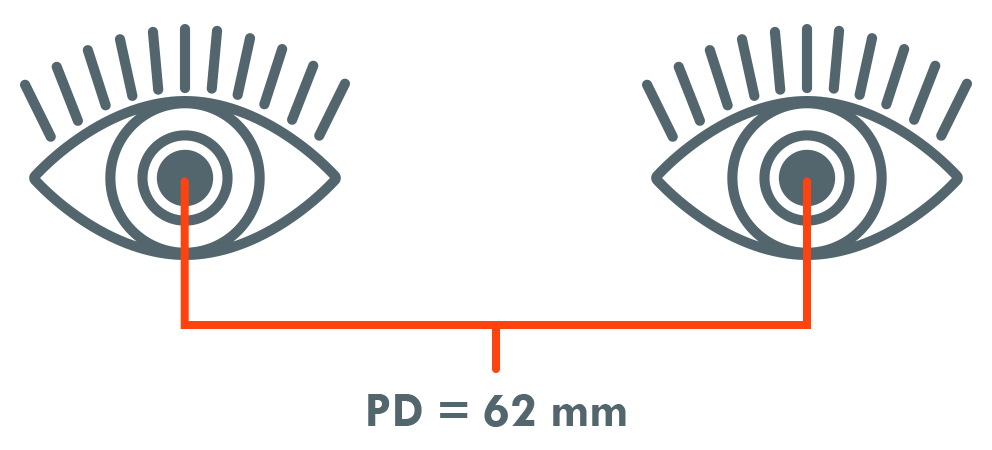
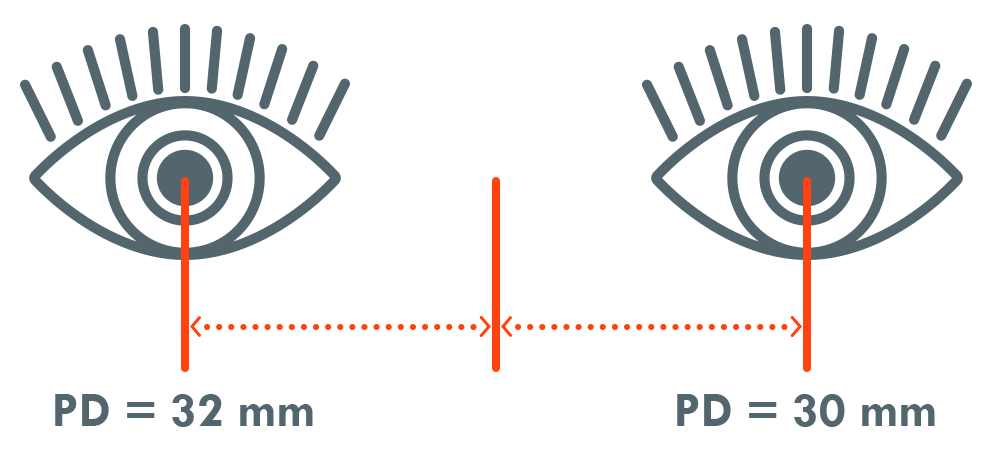
If your PD consists of one number, also known as "Single PD", this is the pupillary distance between your pupils. This is typically your distance PD measurement, unless it is noted as a near/reading PD. The distance PD is usually between 40-80mm. You can also calculate near PD, used for reading glasses, by subtracting 3mm from your distance PD.
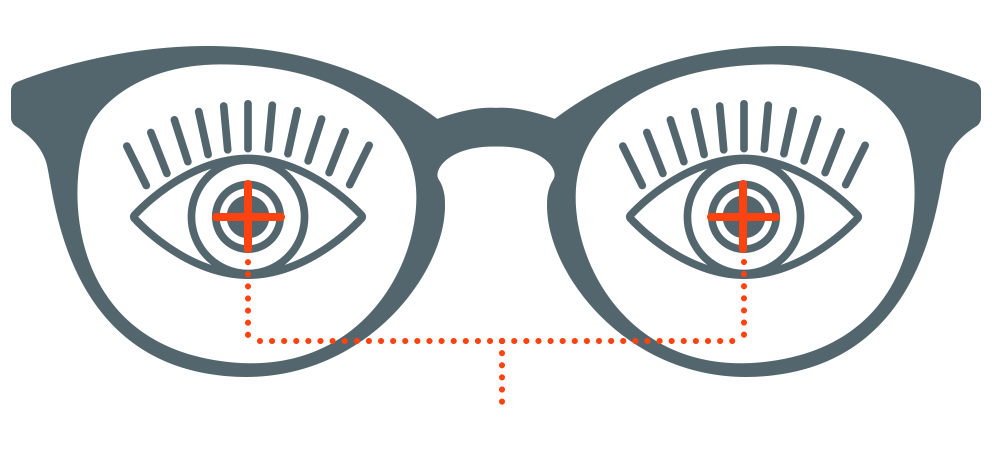
Pupillary Distance (PD), the distance between the
centers of your pupils, determines where you look through the lens of your
glasses. It should be as accurate as possible. The average adult's single PD is
between 54-74 mm; kids' are between 43-58 mm.
Learn how to measure, as
well as understand the differences between single, dual and near PD by checking
out our PD infographic and How-To-Video.